Frisco Oral & Dental Implant Surgery

Botox in the Business World

You may have heard, BOTOX® is not just for women.  Men have also discovered the wonders of this industry-changing cosmetic injectable, and what it can do for a person’s confidence!  That’s why we are seeing more and more professional men in our office now than ever.  In fact, over the past 15 years, BOTOX® use among men has increased by over 200%.  These numbers aren’t surprising.  What is interesting to note, however, is that the average man is using BOTOX® a bit differently than the average woman. Forever-Young-Botox-in-the-Business-World 

Here are some of the ways that men are using BOTOX® to enhance their personal and professional lives. 

First of all, most of the men that we see actually prefer to leave some of the wrinkles as is.  In fact, most men are leaving all wrinkles there at least partially.  The trend is to look distinguished and experienced, which wrinkles can help with, just not too old. 

Another difference between men and women seems to be that men are less likely to share their use of BOTOX® with other men.  Whether it is because they are doing it more for professional reasons or not isn’t clear, but what we do know is that plenty of men are coming to us for this treatment nowadays. 

So, if you are a man with wrinkles that you would like diminished, you may think you are alone, but you certainly are not!  Give us a call to find out what we can do for you! 
Dental Implants- A Three-Step Procedure

One of the most common questions we hear from patients when it comes to dental implants is “Why does it take three separate procedures?”

Dental Implants - 3 Step

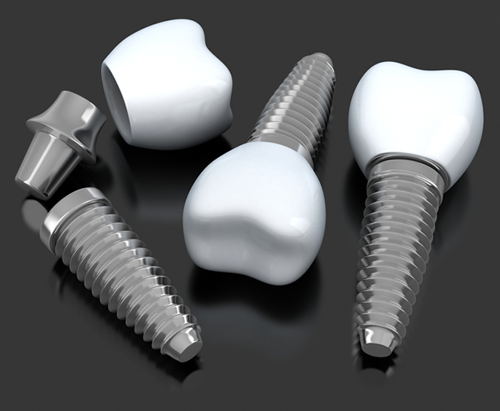
It helps to understand that within the entire dental implant process, there are not just three stages, there are also three important parts to the final product that replaces your tooth. First, there is the implant itself, which is the metal rod that we surgically implant into the bone. Next, there is the abutment, which connects the implant to the artificial tooth. And lastly, the crown (or prosthetic tooth) itself.

The fact that the process has three physical components alone doesn’t tell the whole story though. Here, we explain why the most commonly employed dental implant method is split up into three separate procedures.

Step One: Placing the Implant

The first stage of the dental implant process is to bury the implant in the jaw bone via a surgical procedure. The dental implant replaces the tooth root, and requires healing time. During this healing time, osseointegration (the integration of the bone with the implant itself) occurs. The bone cells actually attach to the implant rod, filling in the spaces to secure the implant in place for permanent residency.   The healing time usually takes from 3-6 months.

Step Two: Placing the Abutment

The abutment is a post that connects the implant to the prosthetic tooth. Essentially, the abutment is a bridge that spans through the gum line so that the implant itself remains buried. As with the implant, the abutment has a healing period of its own. The gum around the abutment must heal and form a cuff or collar around it before the crown can be placed.

Step Three: The Prosthetic Tooth

Once the implant site and abutment have successfully integrated, the prosthetic tooth is fabricated and installed.

If you have any questions about the dental implant process, give us a call!

History of Bone Grafting

The concept of bone grafting is nothing new. In fact it has been an important part of medicine as far back as the early 1600’s and in recent years has become a standard procedure for people who need a dental implant or have had a traumatic jaw injury. Shortly after the invention of the microscope, the Dutch doctor Jacob van Meekeren performed the first bone grafting operation on a soldier with a damaged skull. Unfortunately, back then doctors didn’t have the knowledge or bone grafting materials that we have today and in order to save the soldier, Jacob van Meekeren was forced to use a piece of dog bone as implant material. Van Meekeren was pleased with the surgery’s success, but it wasn’t until the soldier returned asking to have the implant removed that van Meekeren discovered just how successful it really was!

History of Bone Grafting

In the 1600’s, the Christian church looked at things a little differently and this poor soldier with a piece of dog bone in his skull was excommunicated after the church considered him to be part dog. What was upsetting for the soldier aided in the discovery of how well bone grafting actually worked. In the process of attempting to remove the bone graft, van Meekeren discovered that the bone had healed too well and was actually irremovable!

Bone grafting developed over the next 150 years and by 1821 the first graft of tissue from one point to another of the same individual’s body, known as an autograft, was performed in Germany. During WWI and WWII, bone grafting continued to develop as more soldiers became crucially wounded and a need for advanced surgeries became necessary. After another fifty years the first synthetic ceramic product was cleared for use in 1991.

As you can see, bone grafting has a much longer history than you might have imagined! To find out if you are a good candidate for bone grafting, give us a call!

Dental Implants vs Dentures and Bridges

Whether it was during a consultation in our office or perhaps while you were doing your own research online, you have probably come across the term “dental implant” at some point. A dental implant is a great way, often the best way, to replace a missing tooth.

Dental lmplants vs Dentures

So how do you decide if a dental implant is the right path for you, or if a more traditional tooth replacement method such as dentures or bridges is the best way to go?

We have been asked this question many times, and have compiled a comprehensive breakdown of the benefits that implants offer over their conventional counterparts. We hope that this guide will help make the decision process easier for you.

Dental Implants vs. Dentures and Bridges: Things to Consider

  • Longevity: Dental implants offer a long-term solution (often lasting a lifetime) to missing teeth, while dentures and bridges require replacement every 5 to 10 years. Not only does this mean less hassle, it also means that implants may be more affordable over time.
  • Quality of Life:
    • Simply put, dental implants look, feel and function more like natural teeth than do dentures and bridges.
    • With a dental implant, our patients can hardly notice the difference when biting into hard objects. They also look more natural.
    • In addition to that, dental implants are fixed – they are not going to fall out while you are talking or smiling, and you don’t have to put them away each night when you go to sleep. They remain in your mouth, anchored to your jawbone at all times.
  • Bone Stability and Health: Just like muscles, bones also need a “workout” in order to maintain their mass and health. So when a tooth is missing from the jawline, the bone underneath the old tooth site becomes atrophied and shrinks. Dentures and bridges do nothing to help this deterioration. However, dental implants actually screw into the bone and integrate with it, actually encouraging new bone growth.
  • Overall Health: Because implants allow for a normal range of food choices in the diet (a benefit not afforded by dentures), they encourage you to continue your healthy lifestyle for the rest of your life!

Do you still have questions? As always, we are here to answer any questions you have. Give us a call for more information!

Heart Disease – The Importance of Good Oral Hygiene

Did you know that poor oral hygiene could increase your chances of developing heart disease? Practicing good oral health habits isn’t just an important part of preventing tooth decay; it’s crucial in maintaining your overall health. But how are heart disease and oral health connected? What we’ve come to understand is that bacteria from infected gums can dislodge, enter the bloodstream and attach to blood vessels, which can increase clot formation. Clots decrease blood flow to the heart and in turn cause an elevation in blood pressure thus increasing the risk of a heart attack.

Heart Disease and the Importance

We can help patients who have a history of heart disease by examining them for any signs of oral pain, infection or inflammation. Brushing and flossing combined with annual check-ups will help to fight the harmful bacteria that cause inflammation and eventually lead to heart disease. Check out these oral hygiene facts and make sure to establish a routine to ensure a great smile and a healthy life.

According to the American Dental Hygienists Association and the Centers for Disease Control and Prevention:

  • Eating healthy snacks like celery, carrots, or apples help clear away food loosely trapped in-between teeth.
  • The leading oral health problem for infants is baby bottle tooth decay, which can be caused when babies are given a bottle filled with sugary liquids, like milk or juice, when put to bed.
  • Nearly 78% of Americans have had at least one cavity by age 17.
  • Men are more likely than women to have more severe dental diseases and oral cancer occurs twice as frequently in men as women.
  • Dental fluorosis (overexposure to fluoride) is higher in teens than in adults and highest among those aged 12–15.
  • Three out of four patients don’t change their toothbrush as often as is recommended. Toothbrushes should be changed every two to three months and after illnesses.

Issues that go untreated can end up costing a lot more than routine visits to your dentist. Prevention through daily cleaning and regular office visits is the best for both your health and your budget. Remember, regardless of how old you are, it’s never too late to start taking serious care of your teeth and mouth.

Oral Cancer What you Need to Know

One of the most important jobs we have in our practice is to examine, monitor and diagnose head and neck pathology in our patients. What we are really looking for is any sign of oral cancer. Each year, about 42,000 Americans are newly diagnosed with oral cancer. Unfortunately, more than 8,000 of those people will die from the disease because too often it is caught in a late, incurable stage.

Oral Cancer What you Need to Know

To help you stay healthy and educated about your oral health needs, we have compiled a list of the most important things you should know about oral cancer:

• Oral cancer affects more than just the mouth. Any cancer in the mouth, lips, throat or back of the mouth is considered oral cancer.
• Since 90% of oral cancers begin in the surface area of the mouth, tongue and lips, we recommend regular self-exams.
• Largest risk factors: Not surprisingly, tobacco and alcohol use top the list of biggest risk factors for oral cancer.
• Other risk factors: Human papilloma virus (HPV), pre-cancerous oral lesion, betel quid use (common in Asia), excessive UV/sun exposure, certain drugs and genetic syndromes.
• To diagnose oral cancer, we will examine the mouth and neck, ask about your risk factors, and possibly order biopsies and imaging of the head (CT, MRI, etc).
• Pain is not associated with cancer in its early stages. Usually pain does not occur until the cancer has progressed to a later stage.
• The most common oral cancer symptoms warrant a call to our office. They include: sores that don’t heal, lumps inside the mouth, white or red patches on soft tissues in the mouth, bleeding, pain when swallowing or chewing, numbness, difficulty moving the jaw or tongue, lumps in the neck, hoarseness, and more.

Don’t hesitate to us if you are experiencing any of these symptoms of oral cancer.

Facts About Bone Grafting

Did you know that with today’s modern techniques, bone grafting is now considered a routine treatment? A bone graft can fix a variety of facial and dental problems and may be required in some cases. If you’ve been told in the past that you’re not an ideal candidate for getting a tooth implant, call us to ask about how a sinus graft makes it possible for many of our patients to receive dental implants. Here are a few things you should know if you’re thinking about getting a dental implant or think a bone graft could help you.

Facts About Modern Bone Grafting

It’s a routine procedure!

Bone grafting has become a standard practice. Depending on the quantity and quality of jawbone, most procedures take place in our office and we use local anesthesia or conscience sedation to relieve any anxiety.

Bone loss has been virtually eliminated!

The only reason our jaws have the amount of the bone that they do is because of the presence of existing teeth. Complicated procedures were developed in the past to attempt to rebuild jaws that had atrophied due to missing teeth and disuse but with the modernization of bone grafting and dental implants, we can prevent jawbone atrophy all together.

There are a variety of materials that can be used.

The bone grafting material you need could come from a variety of sources. Generally, we use bone taken from your hip, jaw, or lower knee but today we have the ability to grow bone where needed or obtain bone from a tissue bank. We also use special membranes to help protect the bone graft and encourage bone regeneration.

Bone grafting allows your body to rebuild itself.

The human body uses most bone grafting materials as a frame on which it can grow new bone. Over time the graft material will be replaced with new bone through your body’s own process of bone regeneration. Maintaining a healthy amount of bone tissue around your teeth is crucial in keeping up your oral health.

If you have a missing tooth, congenital defect, or have had a traumatic jaw injury, and you’re wondering whether you may need bone grafting, give us a call. We can answer your questions, and present the treatment options that are best in your individual situation.

Wisdom Teeth: What Do I Really Need to Know?

For the majority of people, the removal of their wisdom teeth is just another part of growing up. However, that doesn’t mean it’s an easy part! A combination of frightening stories from friends and false rumors online have may have you feeling anxious about your upcoming procedure. So we’d like to set the record straight and put your mind at ease.

Wisdom teethHere is what you really need to know about wisdom teeth:

  1. If you ignore them, there will be more (pain, that is).

Despite their name, it is not a smart idea to refuse surgery and live with your wisdom teeth. Most wisdom teeth are asymmetrical (they don’t grow evenly) which can cause complications. Asymmetric wisdom teeth have a high chance of developing gum disease and infections, which can become life threatening if not treated.

  1. Patience is not a virtue.

As wisdom teeth generally form roots during the teenage years, it is better to have them removed during that time. Waiting until you are 30 or 40 can increase the chance of them rupturing a nerve, leading to a longer and more complicated recovery.

  1. I scream for ice cream!

We recommend that you only ingest liquids for a day after the procedure. Ice cream, pudding and smoothies are all great choices (without straws). Softer foods are advised for the rest of the week, so make sure to stock up on pasta, eggs and mashed potatoes! And remember: NO straws during your recovery period.

  1. No pain, plenty to gain.

Thanks to anesthesia and/or laughing gas, your wisdom tooth extraction will be painless. However, most of our patients do experience some sort of discomfort in the days following the surgery, so we will suggest methods and medications to help with that while you are in our office.

  1. Rest is the best!

Post-removal recovery depends on the patient, but most people do not resume work for four-to-five days. Patients are also advised to not exercise vigorously or play any sort of wind instrument for a week.

Dental Implants: Five Things You May Not Know

How much do you know about dental implants? With the increasing popularity and availability of dental implant surgery worldwide, patients are gaining more and more knowledge about dental implants every day.

Dental Implant FBut did you know these five important facts?

  1. Dental implants are appropriate for almost all ages. Not just for the elderly, dental implants are frequently placed even in the mouths of young adults. As long as the jaw has stopped growing (after puberty; age 16 for girls and age 18 for boys), a dental implant can be placed with great success.
  2. The titanium post actually fuses (osseointegrates) with the natural jawbone. They grow together to form a stronger foundation for replacement teeth. So dental implants actually improve the bone structure in the jaw, they don’t just fill it in.
  3. The “dental implant” is actually just the titanium post, one of three parts of the whole process. Other parts used in the full procedure that we think of as “dental implant surgery” are known as the abutment (the connector) and the actual replacement tooth itself (the crown).
  4. Dental implants preserve jawbone, whereas other teeth replacement options can lead to bone deterioration. Bone is similar to muscle in that it must be used in order to maintain its mass. When a tooth goes missing and the site is left untreated, the jawbone underneath tends to deteriorate. Dental implants eliminate this problem by securing a natural-like tooth right into the jawbone and thus utilizing (and preserving) that area of bone.
  5. Dental implants protect their neighbors. By contrast, a traditional, tooth-supported bridge involves the grinding away of the teeth on either side to act as a hammock for the bridge. With dental implants, the jaw is the anchor and support for the artificial tooth.

The bottom line? Dental implants offer a safe and manageable alternative to traditional tooth replacement methods.

Diabetes and Oral Health – A Two-Way Street

If you, a friend or a family member have diabetes, you may have heard that this common disease increases a person’s risk of gum disease and other oral health problems. But did you know that this relationship is a mutually distressing one? Not only does diabetes make gum disease worse, but gum disease can actually make diabetes worse too by interfering with blood-glucose management strategies.

diabetes oral healthHere, we shine some light on the relationship between diabetes and oral health, and what you can do about it.

Diabetes makes it difficult for the body to fight infection. Whether the infection is located in the mouth, the leg or any other part of the body, poor circulation suppresses the immune system, making it harder for the body’s natural infection fighting responders to do their job. This means that if you have diabetes, you are more prone to gum disease, and other oral health problems too such as thrush and dry mouth.

On the flip-side, gum disease can also make diabetes worse. Whenever the body is fighting illness or an infection (such as a cold or the flu or even gum disease), blood sugar spikes are harder to control with regular methods and thus extra monitoring and control-measures are required.

Are you wondering what you can do to minimize this damage? First and foremost, keep your blood sugar under control using the methods that your physician has prescribed. Next, practice good oral health maintenance with regular brushing and flossing. And finally, don’t skip regular trips to the dentist and other oral health professionals. If you have diabetes, you cannot afford to ignore this important part of your body.